Introduction
Manufacturing operations managers are under real pressure: fragmented software stacks, disconnected shop floors, and shrinking margins leave little room for inefficiency. The average discrete manufacturer operates with 70% manual data collection, creating a disconnect that costs the industry an estimated $864 billion annually in unplanned downtime and lost productivity.
The right platform — whether it handles machine-level connectivity, shop floor execution, or enterprise-wide planning — directly cuts downtime, improves data accuracy, and lifts production efficiency.
The global Manufacturing Operations Management (MOM) market is projected to grow from $19.63 billion in 2025 to $44.41 billion by 2030 at a CAGR of 17.74%. Manufacturers are moving fast to connect shop floor machines to planning systems — and choosing the wrong platform can set that effort back by years. This guide breaks down the leading manufacturing productivity and management platforms for 2026, covering what each does well, who it's built for, and how to evaluate the right fit for your operation.
Key Takeaways
- Manufacturing productivity platforms span machine monitoring/IIoT, MES, MOM, and ERP categories, each addressing different production layers
- Platform selection depends on shop size, machine mix (legacy vs. modern), and whether your priority is shop floor visibility, execution control, or enterprise planning
- Key factors include real-time connectivity, integration with existing systems, deployment speed, scalability, and total cost of ownership
- This guide covers five leading platforms, from machine-level IIoT to full enterprise ERP, to help manufacturers identify the right fit
- Most effective stacks combine platform types — machine monitoring feeds real-time data up into ERP/MES layers for better decision-making
Overview of Manufacturing Productivity and Management Platforms
Manufacturing productivity and management platforms are software solutions designed to connect, monitor, and improve performance across the people, machines, and processes that drive production. They fall into four distinct categories, each serving a different layer of operations:
- Machine Monitoring / IIoT — collects real-time data directly from shop floor equipment
- Manufacturing Execution Systems (MES) — controls and tracks production as it happens
- Manufacturing Operations Management (MOM) — coordinates processes across the broader production environment
- Enterprise Resource Planning (ERP) — manages business-level functions like finance, supply chain, and orders
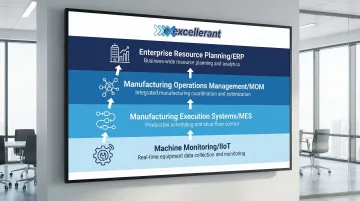
The key divide is between ERP — which handles business-level data — and MES or machine monitoring platforms, which manage what actually happens on the shop floor. That disconnect between enterprise planning and production reality is the central challenge for manufacturers in 2026. According to industry research, only 16% of manufacturers have real-time visibility into manufacturing production, leaving the majority operating with significant blind spots.
The platforms covered in this guide address that gap — from standalone machine monitoring tools to full MES deployments — so you can identify what fits your operation.
Best Manufacturing Productivity and Management Platforms in 2026
These platforms were selected to represent the full stack of manufacturing management — from machine-level data capture to enterprise planning — giving manufacturers a reference point regardless of where they are in their digital journey.
Excellerant
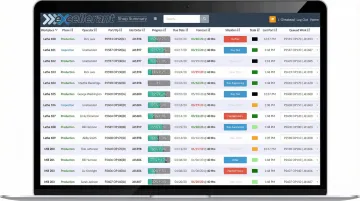
Excellerant is a certified veteran-owned, U.S.-based IIoT and machine tool networking company with roots dating back to 1991. It provides machine monitoring, DNC software, and real-time shop floor data collection for environments ranging from small machine shops to aerospace and defense facilities.
Why it stands out: Excellerant connects to any CNC brand or protocol — including legacy machines most modern platforms cannot reach. That universal compatibility is the core differentiator. The company developed the world's first wireless DNC connection in 2001 and has since built out features like one-click G-code revision compare and real-time machine data visualization. Licensing is flat: unlimited client access, no per-seat fees that balloon as your team grows.
| Category | Details |
|---|---|
| Best For | Machine shops, CNC environments, aerospace, defense, and medical device manufacturers needing real-time shop floor visibility and DNC connectivity across legacy and modern machines |
| Key Features | Universal machine connectivity (any brand/protocol), real-time machine monitoring, wireless DNC, integrated DNC software with revision compare, IIoT data collection, ERP data accuracy improvement, bidirectional MES/ERP integration |
| Deployment & Pricing | Cloud-hosted with single on-premise server; USA-based technical support via phone (860-870-5544) and email; unlimited client access model with no per-seat licensing fees; contact for specific pricing |
Epicor Kinetic
Epicor Kinetic (formerly Epicor ERP) is a manufacturing-specific ERP system built for discrete manufacturers in the mid-market. It covers production planning, supply chain, financials, and shop floor management in a single platform.
Why it stands out: A 97% retention rate among discrete manufacturers is the clearest signal of how well Epicor Kinetic delivers. Cloud and on-premise deployment options make it workable for job shops and mixed-mode manufacturers alike. Competitors in this space routinely position themselves against it — which says something about where it sits in the market.
| Category | Details |
|---|---|
| Best For | Mid-market discrete manufacturers ($5M–$100M revenue) needing full-featured ERP with strong shop floor and production management |
| Key Features | Production scheduling, inventory management, financials, supply chain, shop floor control, cloud/on-premise deployment |
| Deployment & Pricing | Subscription-based starting at $125/user/month; implementation costs range from $100,000–$500,000 depending on scope; minimum implementation fees typically start at $50,000 |
SAP S/4HANA Manufacturing
SAP S/4HANA is the enterprise ERP standard for large and global manufacturers, built on the high-performance SAP HANA in-memory platform with built-in AI (Joule AI), making it suitable for manufacturers who need a unified system across finance, logistics, production, and compliance at scale.
Why it stands out: Its AI-native approach through SAP Joule, massive install base, and suitability for regulated industries (automotive, pharma, aerospace) make it the go-to for global enterprises. The cost and complexity are real barriers, though. Implementation typically runs 12–24 months, carries a steep learning curve, and can stretch into multi-million dollar territory — which prices out most operations below enterprise scale.
| Category | Details |
|---|---|
| Best For | Large enterprises and global manufacturers needing fully integrated ERP with AI-driven automation and compliance capabilities |
| Key Features | Joule AI automation, advanced planning, compliance management, financials, production execution, global multi-site support |
| Deployment & Pricing | Subscription-based starting at $200/user/month; minimum implementation services typically start at $75,000; enterprise projects often range from high six figures to multi-million dollars |
Plex (Rockwell Automation)
Plex, now part of Rockwell Automation, was one of the first cloud-native smart manufacturing platforms, blurring the line between ERP and MES by combining financial management, production execution, and quality control in a single cloud environment.
Why it stands out: Plex removes the need for separate ERP and MES vendors — one platform handles both. Its deep integration with Rockwell's automation hardware is a genuine advantage for manufacturers already in that ecosystem. Worth noting: this is not a bolt-on. Plex works best for organizations ready to migrate fully, not those looking to layer it on top of an existing ERP.
| Category | Details |
|---|---|
| Best For | Mid-to-large manufacturers seeking a single cloud platform that combines ERP, MES, and quality management without multiple vendor integrations |
| Key Features | Cloud-native ERP/MES hybrid, production tracking, quality management, supply chain visibility, Rockwell automation integration |
| Deployment & Pricing | SaaS subscription model starting around $500/user/month (quote-based); deployment timelines range from 3–6 months for smaller organizations to 6–18 months for mid-sized operations |
Siemens Opcenter
Siemens Opcenter (formerly SIMATIC IT) is a comprehensive MOM and MES platform designed for large, highly automated manufacturing enterprises, offering advanced planning and scheduling, R&D formulation management, and deep integration with Siemens PLCs and automation infrastructure.
Why it stands out: Opcenter goes deeper into production control than most platforms can. For automotive and aerospace OEMs running complex, high-volume operations, that granularity is the point. The implementation reality is just as significant, though: multi-year deployments, dedicated engineering teams, and enterprise-level spend that rules it out for most small and mid-sized operations. For large manufacturers with the resources to match, it delivers capabilities few platforms can match at that scale.
| Category | Details |
|---|---|
| Best For | Large enterprises in automotive, aerospace, and process manufacturing with complex, highly automated production environments |
| Key Features | Advanced planning and scheduling (APS), MES execution, R&D/formulation management, Siemens PLC integration, multi-site control |
| Deployment & Pricing | Subscription-based per-user/per-month; example pricing: $37,000/year for 10 users (Opcenter Execution Process); full enterprise rollout typically takes 12+ months |
How We Chose the Best Manufacturing Management Platforms
Platforms were assessed across multiple layers of manufacturing operations — not just ERP breadth — to reflect how modern factories actually operate. The common mistake manufacturers make is evaluating only enterprise-level ERP while ignoring the shop floor connectivity and machine data layer that feeds it. This oversight creates a disconnect where business systems run on incomplete or delayed information.
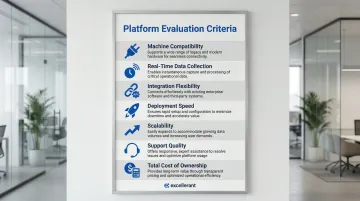
Each platform was evaluated against the following criteria:
- Machine compatibility — Support for both legacy and modern equipment, including older CNC machines that lack native IoT connectivity (approximately 65% of North American CNC machines fall into this category)
- Real-time data collection capability — Ability to capture and transmit production data instantaneously, not through batch updates
- Integration flexibility — Direct compatibility with existing ERP/MES systems through open APIs and standard protocols
- Deployment speed — Time from initial engagement to productive use, ranging from weeks for IIoT platforms to months or years for enterprise ERP
- Scalability — Ability to grow with operations of different sizes without prohibitive licensing or infrastructure costs
- Support quality — Technical assistance availability, response times, and expertise depth
- Total cost of ownership — Including licensing, implementation, training, and ongoing maintenance
Most effective manufacturing technology stacks combine more than one platform type. A machine monitoring/IIoT layer — like Excellerant — feeds accurate, real-time data into whichever ERP or MES sits above it, which is where the measurable shop floor impact actually happens.
One Excellerant customer put it directly: "The accuracy of information coming into our ERP system is exponentially better than what it was before," a change that improved both cost accuracy and customer value.
Conclusion
There is no single platform that serves every manufacturing operation. The right solution depends on shop size, machine mix, operational maturity, and whether the priority is shop floor visibility, execution control, or enterprise planning.
Each platform covered in this guide targets a distinct profile:
- SAP S/4HANA — large global manufacturers needing comprehensive enterprise coverage
- Epicor Kinetic — mid-market discrete manufacturers seeking a proven sweet spot
- Plex — operations moving toward unified, cloud-native manufacturing execution
- Siemens Opcenter — facilities with complex automation and MES depth requirements
Whichever direction you go, assess the full technology stack before committing — including the foundational layer of machine connectivity and real-time data capture. Platforms that cannot see what's happening on the shop floor cannot manage it effectively, regardless of their enterprise-level sophistication. Prioritize solutions that can scale with your operation without excessive licensing or integration overhead.
Manufacturers looking to establish or improve their shop floor data foundation can reach out to Excellerant — with over 30 years of machine tool networking experience and universal connectivity for any brand or protocol, they help operations of all sizes get accurate, real-time data from the machines that matter most.
Frequently Asked Questions
What is the difference between ERP, MES, and machine monitoring software in manufacturing?
ERP manages business-level functions (finance, supply chain, orders), MES handles shop floor execution (work orders, routing, production tracking), and machine monitoring/IIoT platforms capture real-time data directly from machines. All three often work together in a complete manufacturing technology stack, with machine monitoring feeding data to MES, which in turn integrates with ERP.
Can manufacturing management platforms connect to older or legacy CNC machines?
Most enterprise ERP and MES platforms require modern, protocol-compatible machines. However, purpose-built IIoT and DNC platforms (such as Excellerant) are specifically designed to connect any machine regardless of brand, age, or protocol — including older equipment using RS232 serial connections or proprietary communication methods through the use of edge gateways and PLCs.
What is DNC software and why do machine shops need it?
DNC (Distributed Numerical Control) software manages the transfer of CNC programs from a central server to machine tools on the shop floor, ensuring operators always run the correct, current program version. Modern DNC platforms include revision control, wireless transfer, and audit trails — essential for quality compliance and preventing program errors that cause crashes or scrap.
How much does manufacturing management software typically cost in 2026?
Costs vary widely by category. Machine monitoring and IIoT platforms often use subscription models ($10–$100 per device/month) or unlimited licensing. Mid-market ERP implementations range from $20,000–$125,000 in year one; enterprise projects can reach $250,000+, so factor in implementation, training, and ongoing support when comparing options.
What should a small machine shop look for in a manufacturing productivity platform?
Small shops should prioritize ease of deployment, legacy machine compatibility, and real-time visibility — without needing a large IT team to maintain it. Platforms with unlimited client access, no per-seat fees, and USA-based support scale more affordably as the business grows.
How do machine monitoring platforms improve OEE (Overall Equipment Effectiveness)?
Machine monitoring platforms collect real-time data on machine availability, performance, and quality output, giving managers visibility to identify downtime causes, reduce idle time, and make informed scheduling decisions. According to industry benchmarks, manufacturers implementing modern cloud ERP/IIoT solutions report an average 18% improvement in OEE and a **72% reduction in unplanned downtime** by enabling predictive maintenance and faster response times.