What are automated monitoring systems?
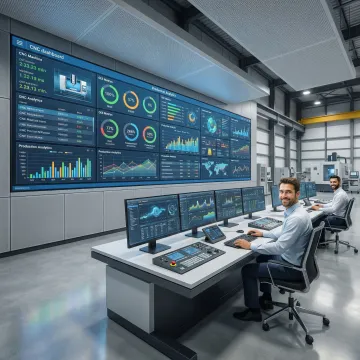
Automated monitoring systems are intelligent platforms that continuously collect, analyze, and report on manufacturing equipment performance without manual intervention. These systems use sensors, IoT connectivity, and software to track machine status, production output, cycle times, downtime events, and quality metrics in real-time, providing complete shop floor visibility and actionable insights.
What is the role of the automated monitoring system?
The role of an automated monitoring system is to eliminate manual data collection, provide real-time visibility into manufacturing operations, identify production bottlenecks, track equipment effectiveness (OEE), predict maintenance needs, enable data-driven decision making, and seamlessly integrate shop floor data with enterprise systems like ERP and MES platforms.
Can automatic monitoring systems connect to older legacy machines?
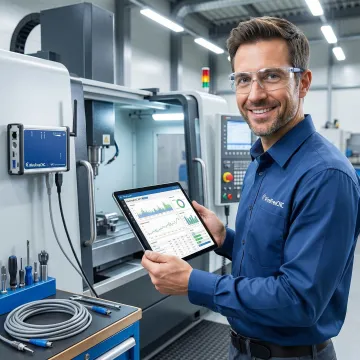
Yes, modern automatic monitoring systems like Excellerant's platform can connect to any machine regardless of age or brand. Legacy equipment can be integrated through serial communications, wireless DNC adaptors, or by adding PLCs as intermediary devices, ensuring complete shop floor connectivity.
How does automatic monitoring reduce manufacturing downtime?
Automatic monitoring captures every stoppage event, categorizes downtime reasons, tracks machine alarms, and provides root cause analysis. This data enables predictive maintenance, instant notifications when issues arise, and informed decisions that prevent recurring problems, significantly reducing unplanned downtime.
What is OEE and how do monitoring systems track it?
OEE (Overall Equipment Effectiveness) measures manufacturing productivity by calculating availability, performance, and quality. Automatic monitoring systems continuously compute these metrics in real-time by tracking machine uptime, comparing actual vs. expected output, and monitoring defect rates across all connected equipment.
How quickly can an automatic monitoring system be implemented?
Implementation timelines vary based on shop floor size and complexity. Modern systems offer plug-and-play connectivity for newer equipment, while legacy integrations require custom configuration. Most deployments are completed within days to weeks, with immediate data collection beginning once machines are connected.
Do automatic monitoring systems require extensive IT infrastructure?
No, modern cloud-based automatic monitoring systems are designed to minimize IT burden. Browser-based interfaces require no client installs, wireless connectivity eliminates extensive cabling, and secure cloud platforms handle data processing and storage. Single server installations support unlimited device access.
What ROI can manufacturers expect from automatic monitoring systems?
Manufacturers typically see ROI through reduced downtime (15-30% improvement), eliminated manual data entry costs, increased machine utilization, improved production forecasting accuracy, reduced scrap rates, optimized maintenance scheduling, and better resource allocation. Many operations achieve payback within 6-18 months.