What are the examples of industrial equipment?
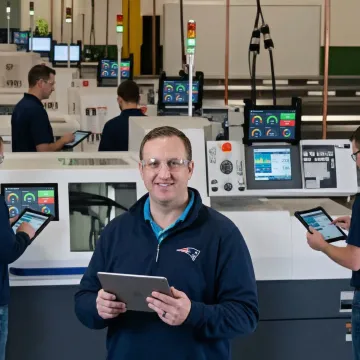
Industrial equipment encompasses a wide range of machinery used in manufacturing operations, including CNC machines (lathes, mills, machining centers), stamping machines, injection molding machines, presses, assembly stations, welding equipment, grinding machines, EDM machines, and various specialty manufacturing tools. Our solutions connect all these equipment types regardless of age, brand, or communication protocol.
What is an MES system in manufacturing?
A Manufacturing Execution System (MES) is software that connects, monitors, and controls manufacturing operations on the shop floor. MES bridges the gap between enterprise systems (like ERP) and the physical production equipment, providing real-time visibility into production status, quality data, and operational performance. Our platform integrates seamlessly with existing MES systems through bi-directional data synchronization.
How does your platform connect legacy equipment to modern Industry 4.0 systems?
Our universal connectivity solution supports legacy equipment through multiple methods: serial RS232/RS485 connections, wireless DNC adaptors, or by adding PLCs as intermediary devices. We support any communication protocol and can connect equipment regardless of age or manufacturer, making Industry 4.0 accessible even for facilities with decades-old machines.
What is the typical implementation timeline for your manufacturing solutions?
Implementation timelines vary based on facility size and complexity. Simple DNC installations can be completed in days, while comprehensive Industry 4.0 transformations with full machine connectivity and ERP integration typically take 2-6 weeks. Our experienced technical team handles installation, integration, and training to ensure minimal disruption to your operations.
Can your system work with our existing ERP or MES software?
Yes, our platform features an Open API and native integrations with major enterprise systems including SAP, Oracle, and leading MES providers. We provide real-time bi-directional data synchronization, eliminating data lag and ensuring your business systems always reflect current shop floor reality.
How does OEE monitoring improve manufacturing productivity?
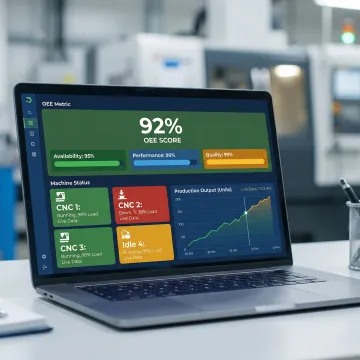
OEE (Overall Equipment Effectiveness) monitoring measures three critical components: Availability (equipment uptime), Performance (speed and yield), and Quality (defect rates). Our real-time OEE tracking identifies specific losses in each category, enabling data-driven decisions to reduce downtime, optimize cycle times, and improve quality—typically resulting in 15-30% productivity improvements.
Is training provided for operators and management staff?
Yes, comprehensive training is included with every installation. Our Lead Service Technician provides hands-on training tailored to your facility's specific needs, covering operator interfaces, management dashboards, reporting tools, and system administration. We offer both on-site and remote training options, with ongoing support available.
What kind of ongoing support do you provide after implementation?
We provide USA-based technical support throughout the United States and Canada during business hours (Monday-Friday, 8AM-4:30PM EST). Our experienced support team offers phone and email assistance, remote diagnostics, software updates, and on-site service when needed. We also provide extensive documentation and video resources for self-service support.